

About Maria Montessori
Maria Montessori (1870–1952) was an Italian physician and educator who became the first female doctor in Italy. Through her early medical work, she developed a deep interest in how children learn, ultimately shifting her focus to psychology and education. In 1907, she founded the first Casa Dei Bambini (“Children’s House”) in Rome, where she observed that children learn best through hands-on experiences, independence, and a carefully prepared environment—insights that became the foundation of the Montessori method.
Montessori’s philosophy centered on the idea that children are naturally driven to learn and can guide their own development with the right support. Her approach quickly gained international recognition, influencing education systems worldwide and expanding through teacher training programs across Europe, the United States, and beyond. Her legacy continues today through Montessori schools around the world and the organization she founded, the Association Montessori International (AMI), which carries forward her vision of child-centered education.
About Montessori
- Montessori education emphasizes the child’s dignity, independence, and natural development within a thoughtfully prepared environment. Teachers are calm, attentive, and responsive, guiding children without interruption or delay. This approach ensures children feel respected, supported, and free to learn at their own pace.
A Joyful, Respectful Learning Environment
- Montessori classrooms foster a calm, positive atmosphere where respect replaces discipline through fear or raised voices. Teachers communicate with kindness and model courtesy, ensuring every child feels valued and never embarrassed. Individual lessons allow educators to understand each child’s unique pace, strengths, and social-emotional development.
The Montessori Work Cycle
- Children engage in uninterrupted, self-directed activity during a 3-hour work cycle, a critical period for deep concentration and learning. While some group work occurs, much of the time is spent independently, building focus, confidence, and competence. This structure creates a calm environment where children feel stimulated, capable, and at peace.
Practical Life
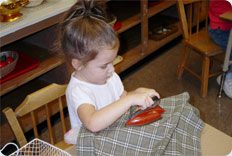
- Practical life activities help children develop independence through real-world tasks like pouring, cleaning, dressing, and organizing. These hands-on experiences build coordination, concentration, and confidence while reinforcing responsibility for self and environment. This foundational work prepares children for future academic learning by strengthening focus and self-motivation.
Sensorial
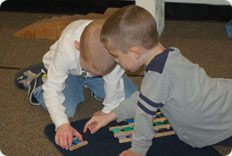
- Sensorial materials refine a child’s senses through hands-on exploration of size, texture, sound, and form. These activities build observation, comparison, and classification skills while indirectly preparing children for reading, writing, and math. Step-by-step learning allows children to develop understanding naturally and with confidence.
Cultural Subjects
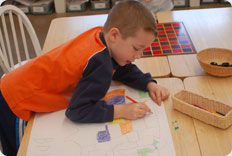
- Children explore geography, science, and world cultures through maps, globes, puzzles, and hands-on materials. They learn about continents, landforms, plants, and global communities in an engaging, interactive way. This fosters curiosity, global awareness, and respect for diversity.
Multicultural Activities
- Cultural diversity is celebrated through food, music, stories, and traditions shared by both teachers and students. Exposure to different cultures helps children develop respect, understanding, and appreciation for others. This inclusive environment strengthens community and broadens perspectives.
Math: From Concrete to Abstract
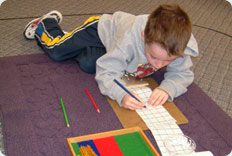
- Children first experience math concepts through hands-on materials that represent quantity, sequence, and numerical relationships. Gradually, they transition from concrete manipulation to abstract thinking, building a deep understanding of mathematical concepts. This method makes math intuitive, engaging, and meaningful.
Language: From Spoken to Written
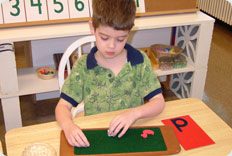
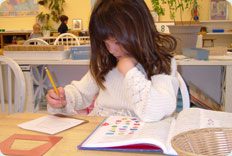
- Montessori language development begins with writing and progresses naturally into reading through sensory-rich materials. Children learn letter sounds, word building, and sentence formation at their own pace. This approach fosters strong literacy skills and a genuine love for reading and writing.
Art and Music
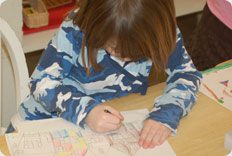
- Creative expression is encouraged daily through drawing, painting, and hands-on art activities. Music is introduced through singing, rhythm instruments, and movement, supporting coordination and enjoyment. These experiences nurture creativity while allowing children to explore and express themselves freely.
Social Skills (Grace & Courtesy)
- Children are guided in respectful behaviors such as patience, kindness, and awareness of others. They learn practical social skills like waiting, offering help, and moving thoughtfully in the classroom. These “grace and courtesy” lessons build confidence, empathy, and a strong sense of community.